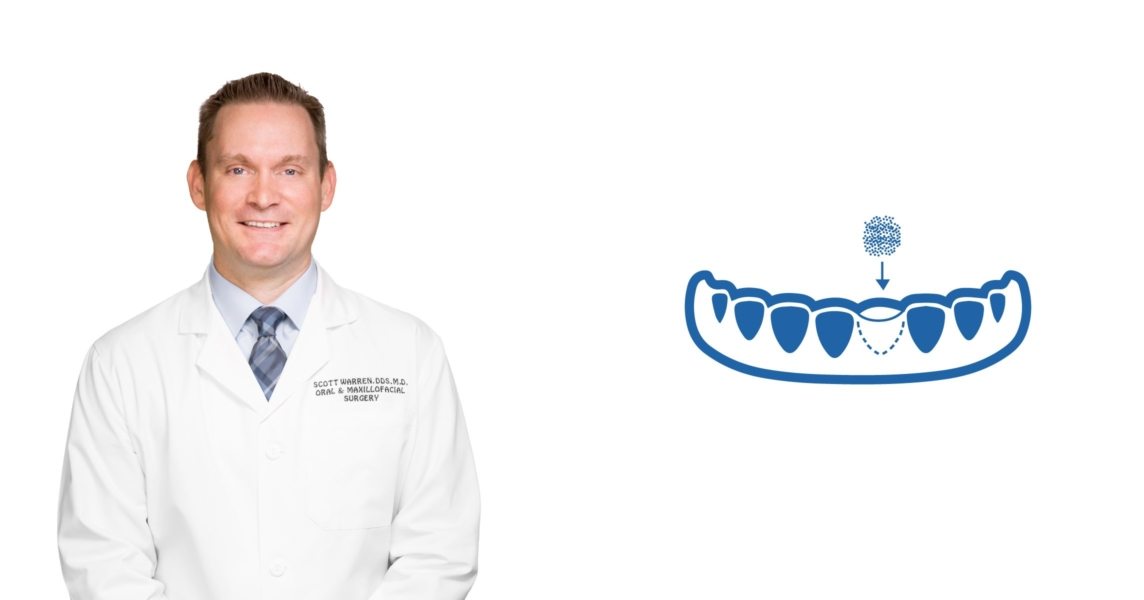




What is bone grafting?
Bone grafting is an oral procedure that establishes new bone where it is needed and promotes bone growth where the jaw bone may be damaged or of poor quality due to atrophy. Your tooth roots naturally stimulate your jaw bone, so when you have missing teeth, your jaw bone lacks that stimulation, and it will shrink over time. When bone degradation occurs, there may not be enough bone to place dental implants successfully. Bone grafting is also used to repair the tooth-supporting bone that has been damaged by periodontal disease.
What does bone grafting involve?
Bone grafting requires supplemental bone from either a tissue bank or another place in your body, such as the jaw, hip, or tibia. Special membranes may be used to protect the bone graft and promote natural healing and bone growth—this is known as guided bone regeneration.
What are the benefits of bone grafting?
By regenerating bone tissue, patients who did not qualify for the placement of dental implants due to insufficient bone density or quality can now be considered viable candidates for the tooth replacement procedure.
For patients affected by periodontal disease, bone grafting will repair the supporting bone around your teeth, significantly improving your oral health. Bone grafting will also increase the stability and strength and increase the longevity of your natural teeth, as they will now be supported by adequate bone in your jaw.
Overall, the functionality of your teeth and your aesthetic appearance will dramatically improve.
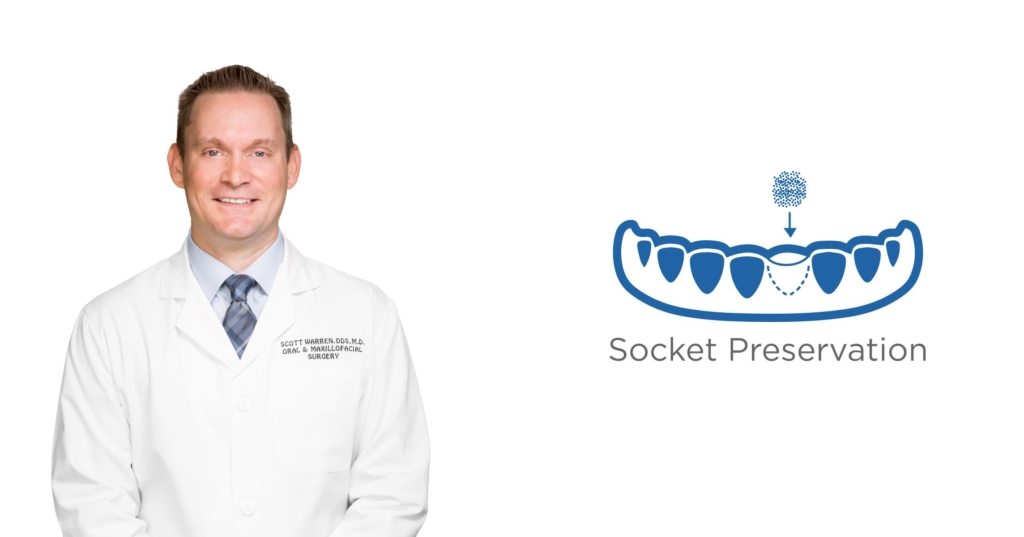 Dr. Scott Warren
Sinus Lift
Why do I need a sinus lift?
If you have lost bone in the upper back jaw due to tooth loss or periodontal disease, there may not be enough bone for the placement of dental implants.
A sinus lift (or sinus augmentation) can correct this issue by lifting the sinus floor and placing an adequate amount of substitute bone to make dental implant placement possible.
What is involved in getting a sinus lift?
To add bone to your upper jaw between your mouth and the maxillary sinuses, the sinus membrane is lifted, and the bone graft is placed. As with bone grafting, the bone used in the sinus lift is from either a tissue bank or another place in your body involving the jaw, hip, or tibia.
After the sinus augmentation, the bone will integrate with your jaw. This takes anywhere from 4–12 months, depending on the type of bone material used and on your individual needs.
What are the benefits of a sinus lift?
Patients with missing teeth or bone loss due to periodontal disease may not qualify for the placement of dental implants and may have to resort to alternative teeth replacement options like loose and uncomfortable dentures. Sinus lifts can provide such patients with adequate bone in the upper jaw for the placement of dental implants.
Whether you need a bone graft to fix a single tooth site or a larger area where several teeth have been lost, or you are treating an oral disease, Brazos Oral & Facial Surgery has a solution to restore your oral function and aesthetic appearance. Dr. Scott Warren will complete a thorough oral consultation and X-ray evaluation of your gums, teeth, and jaws. He will discuss your options for jaw bone repair so that you are fully informed on which bone grafting technique will offer you the best outcome from treatment. We will work closely with you to develop a plan that will restore both function and aesthetics.